Are Your Grain Bins Ready for Winter? Best Practices Every Iowa Farmer Should Know
When winter hits Iowa, one of the biggest concerns for farmers is keeping stored grain safe and in top condition until it’s time to sell or use. Grain storage issues such as spoilage, condensation, and temperature fluctuations can lead to major losses. That’s why it’s essential to prevent grain spoilage in winter by following proven maintenance and monitoring practices for your bins.
Inspect Before You Store
Before the temperatures drop, every farmer should begin with a complete grain bin inspection. Start by cleaning out the bins thoroughly — remove old grain, debris, and dust that can harbor mold or insects. Check the structure for cracks, leaks, or gaps that might allow moisture or cold air to penetrate.
Pay close attention to seals around doors and vents, as these areas often let in unwanted moisture. Replacing worn seals and ensuring tight closures can help maintain grain bins in winter by preventing condensation from forming inside.
Grain moisture is one of the leading factors that determine whether your harvest stays in good condition throughout the winter months. To achieve effective grain bin moisture control, you’ll need to make sure the grain is dried to an appropriate level before storage. Corn, for instance, should generally be stored at around 13-15% moisture for long-term holding.
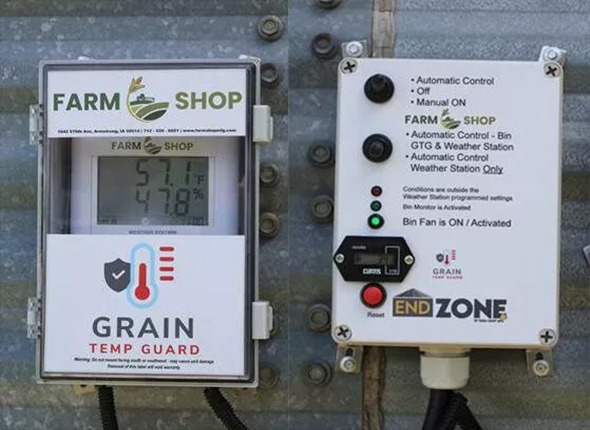
Using products such as Grain Temp Guard systems can help you monitor both temperature and moisture levels in real time. These devices, including options like the Alarm DT and Alarm HT models, help farmers detect problem spots early. Similarly, Grain Temp Guard probes provide accurate readings within the bin, allowing adjustments to be made quickly before spoilage occurs.
Keep an Eye on Temperature
Temperature fluctuations inside a bin can lead to condensation, mold growth, and spoilage. Regularly checking and maintaining stable temperatures is key to controlling grain temperature in Iowa, especially when the weather changes rapidly.
Devices such as the Grain Temp Guard Dual System and Door or Side Wall Mounting Kits make it easy to place temperature sensors exactly where they’re needed. By tracking conditions throughout the bin, farmers can catch any “hot spots” caused by uneven airflow or spoilage before they spread.
Ensure Proper Aeration
Even in winter, aeration remains a crucial step in maintaining grain quality. Running fans during the right conditions helps equalize temperature and humidity levels throughout the bin. This is particularly important after the first cold snap, when outside air is cooler and drier.
A product like End Zone for Corn can help manage and condition grain, keeping airflow balanced and reducing the chances of crusting or clumping. Regularly check aeration ducts to ensure they’re free of obstructions for optimal air movement.
Monitor Consistently Throughout the Season
Grain bin management doesn’t end once the lids are closed. The best way to prevent grain spoilage in winter is through ongoing monitoring. Schedule periodic checks to record temperature, moisture, and overall grain condition.
Tools such as the Grain Temp Guard – 1st Generation and Grain Temp Guard Probes make this easy, providing reliable readings that alert you to any concerning changes. If readings show rising heat or moisture, act quickly — run aeration fans, adjust airflow, or move grain if necessary.
Stay Ahead with Smart Maintenance
Before each season, replace components like batteries and ensure all sensors are functioning properly. Using the Grain Temp Guard Lithium 9V Battery ensures continuous performance for your monitoring systems.
Preventative steps like these, combined with dependable equipment, help you maintain grain bins in winter and avoid costly surprises.
Wrapping Up
Winter grain management in Iowa isn’t just about storing your harvest — it’s about protecting your investment. Regular inspections, effective aeration, moisture monitoring, and reliable temperature control systems are essential to control grain temperature in Iowa and maintain grain quality.
By using dependable tools such as the Grain Temp Guard systems and End Zone for Corn, farmers can confidently prevent grain spoilage in winter and ensure their grain bins stay in prime condition through the coldest months. With smart preparation and continuous monitoring, you can enjoy a worry-free storage season and maintain the value of your hard-earned harvest.